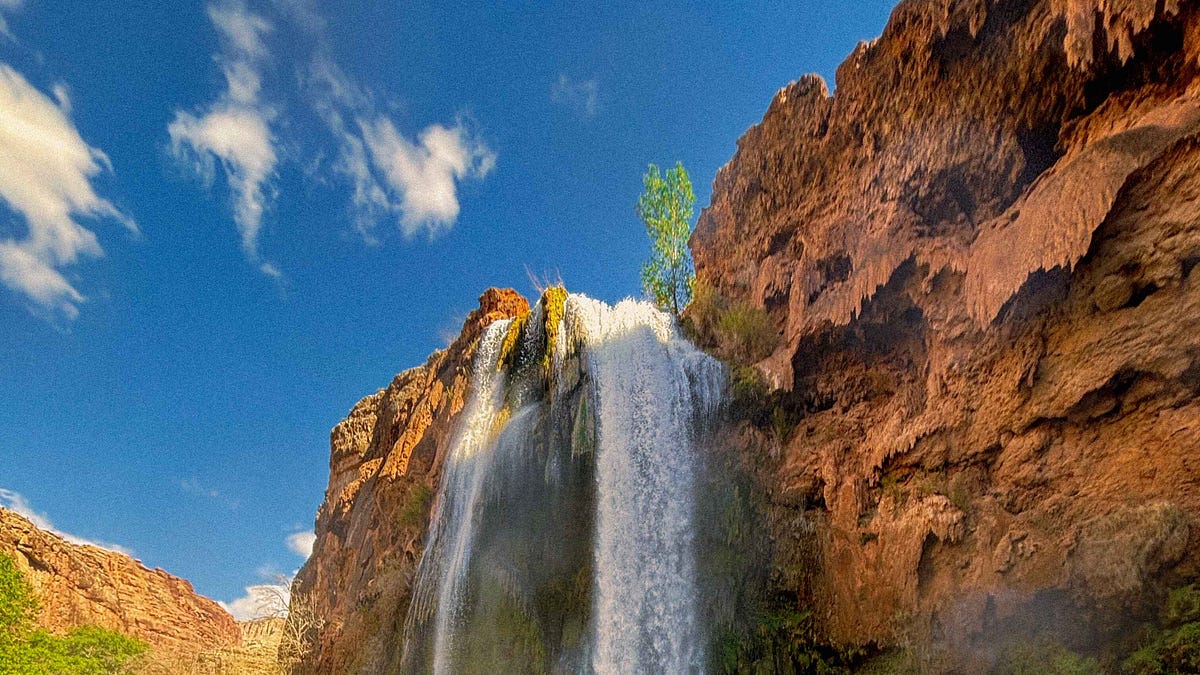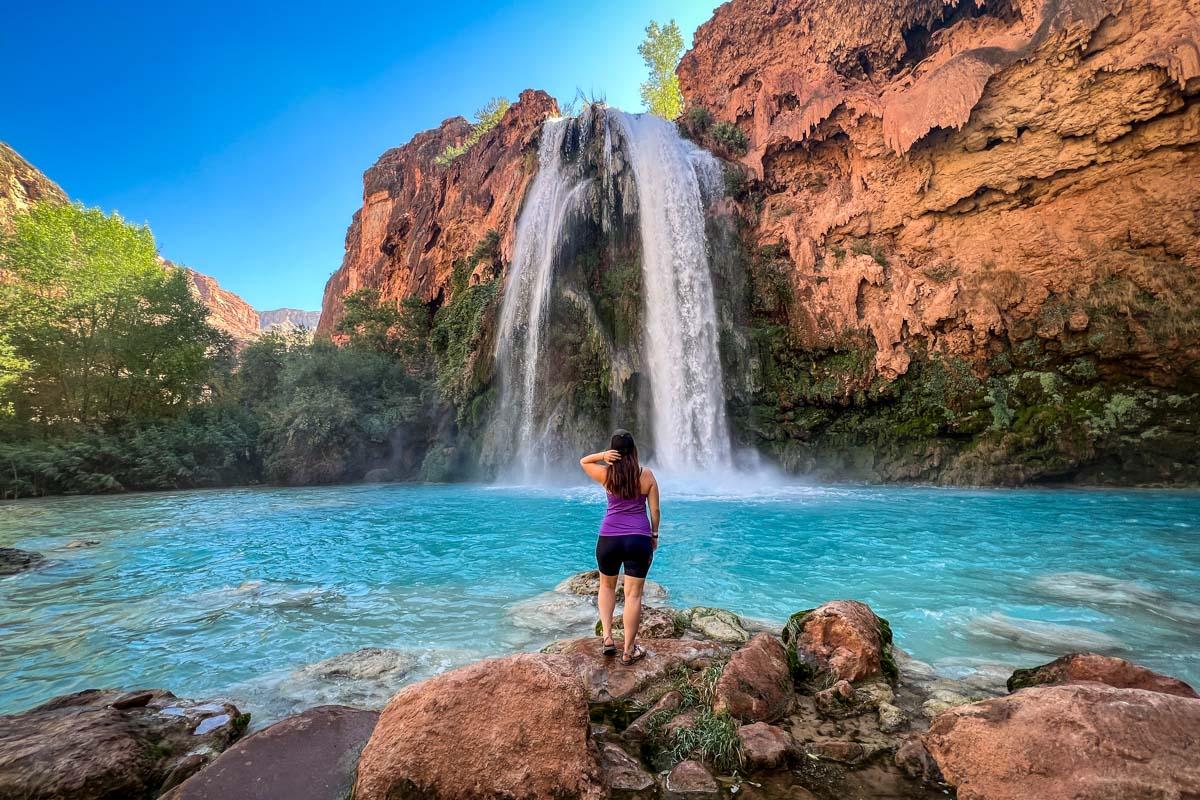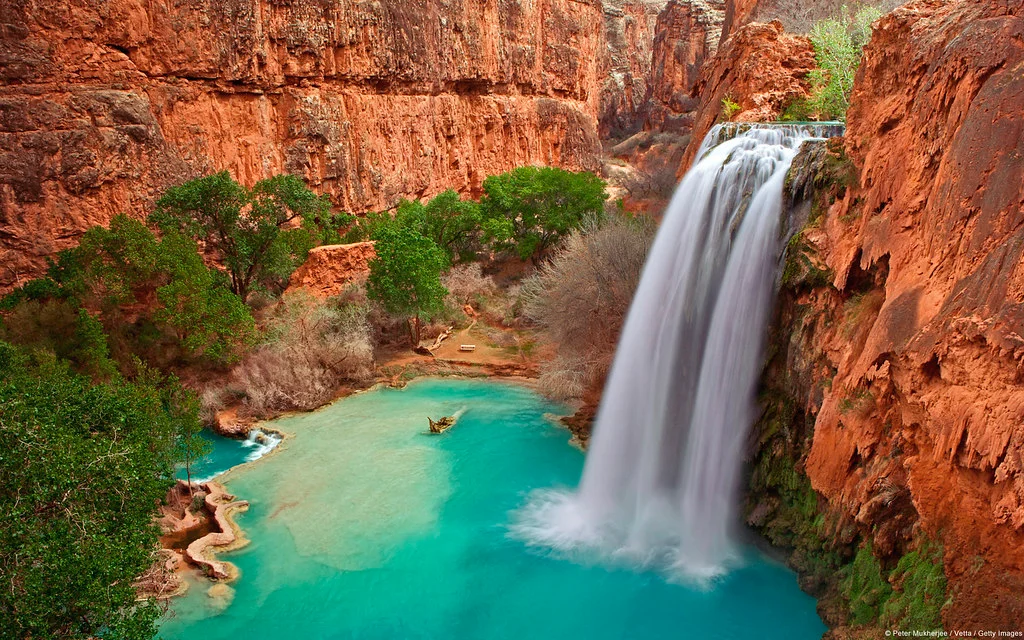
Havasu Falls sits on Havasupai tribal land in a remote desert canyon. Getting there requires respecting a permit system fundamentally different from every federal hiking permit in the country. The tribe controls the operation, limits daily visitor capacity, and enforces strict rules on cost, timing, and resale. This is not a lottery system. It’s a direct online reservation where peak-season availability can disappear quickly. Costs matter here more than they do for most federal day-hike permits.
2026 Permit Dates and Costs
| Detail | 2026 Information |
|---|---|
| Early Access Opens | January 21, 2026 |
| Early Access Closes | January 31, 2026 |
| Regular Sale Opens | February 1, 2026 at 8:00 a.m. Arizona Time |
| Campground Cost | $455 per person for 3 nights |
| Lodge Cost | $2,277 per room (up to 4 people) for 3 nights |
| Minimum Stay | 3 nights / 4 days (mandatory) |
| 90-Day Refund Window | Cancellations 90+ days before permit date receive 50% refund |
| Resale Allowed | No. Strictly prohibited and enforced |
| Walk-Up Permits | No |
| Booking Platform | havasupaireservations.com (only official source) |
The Havasupai Tribe’s System
Understand who controls this permit before you book. Havasu Falls isn’t federal land. It’s the Havasupai Indian Reservation, and the tribe manages access, pricing, and environmental protection directly.
Daily capacity is set by the tribe. There is no public lottery and no walk-up workaround. When permits are gone, they’re gone. The tribe doesn’t increase capacity to meet demand because capacity itself is the point. They’re protecting water resources, trail conditions, cultural sites, and the community’s ability to live without being overwhelmed by tourism.
For 2026, the official system centers on early access and regular first-come/first-served sales, with resale prohibited. That structure limits secondary-market speculation and keeps permit revenue with the tribe.
What This Trip Actually Costs
Havasu Falls is expensive. Not just the permit, but the total package. Most online guides bury this fact. Here’s what you’re looking at.
Campground Permit
$455 per person for 3 nights. For a group of four, that’s $1,820 before you buy food, gear, or transportation to the trailhead.
Lodge Permit
$2,277 per room for 3 nights, accommodating up to 4 people. Same three-night minimum. The lodge saves you weight and setup time but costs significantly more. Lodge rooms include two queen beds, private bathroom, bedding, towels, and soap.
Helicopter Access (Optional)
A privately operated helicopter service may be available between Hualapai Hilltop and Supai Village. In 2026, the official tourist price is $300 per person one-way. Flights cannot be booked in advance, are first-come/first-served, and are not guaranteed. After arriving in Supai, you still hike about 2 miles to the campground.
Food and Water
Food needs to come with you because Supai Village’s small store has limited inventory and high prices. Plan to bring enough food for the full three nights and four days. Allow roughly 1.5-2 pounds of food per person per day. For a solo hiker, plan for about 6-8 pounds total; for a pair, roughly 12-16 pounds combined.
Transportation to Trailhead
Supai Village sits at the bottom of Havasu Canyon. The trailhead (Hualapai Hilltop) is accessed via Indian Road 18 from the Route 66 area near Grand Canyon Caverns. Plan at least 1.5 hours driving time from that area to Hualapai Hilltop. Parking at Hualapai Hilltop is limited. Vehicles must be registered at check-in for a parking permit. Roadside parking may be necessary during peak season. There are currently no public transportation options to or from the trailhead. Plan to drive yourself or arrange private transportation.
Total Trip Cost (Sample Group of Two)
- Campground permits: $910 (2 people x $455)
- Food and water: ~$60 (buy ahead)
- Helicopter (if needed): $600 ($300/person one-way)
- Subtotal: $970-1,570 before gear or airfare to Arizona
For comparison, a Half Dome day hike costs $10 per person in permit fees. Havasu Falls is a different magnitude of financial commitment.
The 2026 Pricing Context
Havasu Falls permits have grown substantially more expensive over the past decade. Permit revenue helps support tourism infrastructure, trail maintenance, waste removal, water protection, emergency coordination, and the impacts of hosting visitors in a remote canyon community. Because prices and rules can change year to year, serious visitors should plan early and book only when committed. Havasupai has become materially more expensive than most federal hiking permits.
How the 2026 Booking System Works
For 2026, the official system centers on early access and regular first-come/first-served sales, with resale prohibited. This booking structure shapes how you should plan release-day timing and cancellation monitoring.
Early Access Period (Now Closed for 2026)
The early-access window ran January 21-31, 2026. It’s already passed, but understanding it matters for 2027 planning.
Early access was a guaranteed (not lottery) reservation system. You could choose your dates and number of people directly. The cost: $455 per person plus a $40 per-permit early-access fee. For a solo traveler, that’s $495 total for the campground permit. For a group of two, it’s $950.
Whether early access was worth it depends on whether you could wait until February 1. If regular sale permits were still available, you saved $80 per person by waiting. If February 1 sells out instantly (which it has historically), early access was insurance.
Regular Sale (February 1, 8:00 a.m. Arizona Time)
On February 1, 2026, the bulk of remaining 2026 permits became available at standard pricing: $455 per person for campground, $2,277 per room for lodge.
These permits sell out quickly. Not within seconds like some online releases, but within minutes for popular dates. March through October dates move fastest. Late-season dates, especially November, may linger longer.
The booking platform is havasupaireservations.com. You create an account, select dates, choose campground or lodge, pay immediately. There’s no wait list. No cancellation notifications. When they’re gone, you check back every few days hoping someone cancels.
Cancellations and Wait-Listing
The tribe doesn’t operate a formal wait list. Cancellations appear on havasupaireservations.com sporadically throughout the year. The 90-day cancellation window means permits become available roughly 90 days before the permit start date. That’s your opening.
Set a calendar reminder 100 days before your desired date. Check havasupaireservations.com daily starting 95 days before. Some hikers check multiple times per day during peak season, though the tribe doesn’t publish when cancellations appear.
What You’re Getting Into: The Route
Havasu Falls is 8 miles from Hualapai Hilltop trailhead to Supai Village, with the campground another 2 miles downstream. Total descent from the trailhead to campground: about 10 miles, 2,200 feet down.
The Standard Route
From Hualapai Hilltop (5,200 ft), the trail drops into Havasu Canyon in switchbacks. The first 2 miles lose 800 feet steeply into the canyon mouth. The next 6 miles contour and switchback to Supai Village (3,200 ft). From Supai, the trail continues 2 miles downstream to Havasu Campground (3,000 ft).
Descent time: 3-4 hours for most hikers. Ascent: 4-5 hours (the climb feels harder than the descent). The trail is well-maintained but rocky and exposed in places. Exposure is moderate, nothing technical. Heat builds significantly on warm days.
Critical: There is no reliable water available along the trail from Hualapai Hilltop to Supai Village. Carry 3-4 liters per person for the hike, especially in warm weather. Drinking water is available in Supai Village and has historically been available from a freshwater spring in the campground. Treat creek water and verify current campground water guidance before relying on any untreated source.
Mule and Helicopter Access (Optional)
Pack mule service and helicopter service are separate optional add-ons and should not be treated as guaranteed transportation.
Pack mules cost roughly $400 round-trip per mule and can carry up to four bags, subject to current size and weight limits.
A privately operated helicopter service may be available between Hualapai Hilltop and Supai Village. In 2026, the official tourist price is $300 per person one-way. Flights cannot be booked in advance, are first-come/first-served, and are not guaranteed. Tourists may be bumped by priority users, weather, or schedule changes. The helicopter does not fly to Havasu Campground. If you fly into Supai Village, you still need to hike about 2 miles farther to the campground.
Supai Village and Havasu Campground
Supai Village is the tribal community. It sits in the canyon year-round. The tribe has a small store, a restaurant, and basic services. Everything is walk-in only; there are no roads into or out of the village.
What you can do in Supai:
- Buy some food (limited inventory, higher prices than outside)
- Resupply water (the store has bottled water)
- Eat at the restaurant (tribal food, modest prices, limited hours)
- Use the bathroom and laundry facilities (small fee)
- Stay in the lodge (if you booked the lodge permit)
What you cannot do:
- Drive or park vehicles (no roads, no vehicles in the community)
- Camp in the village (camping is only at Havasu Campground downstream)
- Show up without a permit (the tribe’s rangers check all permits)
Havasu Campground is about 2 miles downstream from Supai, situated alongside Havasu Creek where the turquoise falls begin. The camp has established sites, water access, and pit toilets. Drinking water is available from a freshwater spring in the campground. Creek water and all other sources should be treated or filtered before use.
The Waterfall Areas
Your permit covers access to multiple named waterfall areas on Havasu Creek:
Havasu Falls The primary destination near the campground. A 100-foot cascade dropping into a turquoise pool. Most hikers spend significant time here.
Mooney Falls 196 feet tall, located downstream from the campground area. Accessible via scramble along the canyon wall with chains bolted into the rock and moderate exposure. Most hikers day-hike to Mooney from camp.
Beaver Falls A series of smaller cascades reached via creek walking and scrambling beyond Mooney Falls. Roughly 3 miles from camp, this is a full day trip. Water is cold, currents are real, and this is one of the few hazardous water crossings on the trip.
Season, Weather, and Timing
The tribe allows permits February 1 through November 30. That’s 10 months of access. However, timing matters significantly for experience quality.
Spring (April-May)
Warm days (75-85 F), cool nights (45-55 F). Snowmelt upstream can affect water levels and flow. This is prime season: comfortable temperatures, manageable crowds, minimal weather risk. Book spring and fall dates as soon as reservations open in February to secure the best windows.
Summer (June-August)
Hot days (95-110 F). Monsoon season July-September brings afternoon thunderstorms, flash flood risk, and occasional hail. The canyon walls provide some shade, but exposure is still intense. Water levels can spike dangerously from upstream storms. Not recommended unless you’re heat-acclimated.
Fall (September-November)
Warm days (75-90 F), cool nights (45-55 F). Crowds start decreasing after Labor Day. No snowmelt, no monsoons. Late October and November are underrated for low crowds and stable weather. Winter can bring light snow and temperatures dropping to freezing at night. The creek water stays around 70 F year-round, so swimming is cold but possible even in winter.
Avoid
July-September (monsoon risk and extreme heat). December-January are outside the permitted season.
Best window: April-May and October-November. Book these dates first when February 1 opens.
Permit Rules and What Rangers Actually Check
The Havasupai Tribe doesn’t operate lightly. Their rangers enforce rules consistently. Understand the regulations before you show up.
Check-In Process (Grand Canyon Caverns & Inn)
Check-in happens at Grand Canyon Caverns & Inn, not in Supai Village. The trip leader or one of the named Potential Alternate Trip Leaders must check in the day before or day of the permit start date. Bring government-issued photo ID.
The ranger will issue wristbands at check-in. All visitors must wear wristbands while on the reservation. Don’t lose it. Replacement is complicated and expensive.
If you booked the lodge, you’ll complete a second check-in at the lodge after arriving in Supai Village.
Required Behaviors
- Pack out all trash, including food waste. Zero exceptions. The tribe has a serious pack-in/pack-out policy because they live here year-round.
- No fires. Camp stoves only.
- No pets or hunting.
- No alcohol (tribal law).
- Stay on established trails and camp areas.
- Respect the community. Supai Village is not a tourist attraction. People live and work there.
Violations
Breaking these rules results in immediate removal from the reservation with no refund. Rangers have authority to eject you. It happens.
Cancellation Policy and Refunds
The 2026 cancellation policy is strict but allows refunds within a specific window.
If you cancel 90 or more days before your permit start date, you receive a 50% refund of your permit fee. If you paid $455, you get $227.50 back. If you paid $2,277 for the lodge, you get $1,138.50 back. The early-access fee is never refunded.
If you cancel fewer than 90 days before your permit start date, you receive zero refund. The full amount is forfeited.
Follow the cancellation instructions in your havasupaireservations.com account or check the official Havasupai Tribe website for current procedures.
This is the tribe’s system to ensure reliability and planning. They’re ensuring that if permits go unclaimed, they can resell them. The 90-day window gives them time to market remaining inventory.
If you’re uncertain about your trip dates, book conservatively. The tribe doesn’t offer rescheduling; you must cancel and rebook.
Walk-Up and Release Window Strategy
Unlike Half Dome or Mount Whitney, there is no walk-up availability for Havasu Falls. There is no daily lottery. There is no release window of unclaimed permits dumped back into a pool on a specific date.
Permits are released in two windows: early access (January 21-31) and regular sale (February 1 onward). After that, new availability only comes from cancellations, which appear sporadically throughout the year.
Strategy for getting a permit if you missed February 1:
- Set calendar reminders to check havasupaireservations.com starting 95 days before your desired date.
- Check daily, preferably multiple times per day in the lead-up to your date.
- Follow any WildernessBeta alerts if you’ve signed up for Havasu monitoring (coming in 2027 with the alert product).
- Be flexible on dates. A permit for March 10-13 is better than no permit at all.
- Have your payment method ready. When a cancellation appears, it’s claimed within minutes.
Do not book this permit assuming you’ll find something last-minute. The tribe doesn’t operate a buffer system. Plan ahead.
Insider Knowledge: What Most People Get Wrong
Early access is not automatic insurance. The $40 fee buys guaranteed booking, not better dates. If regular sale permits stay available (uncertain), waiting until February 1 saves the fee. For 2027, watch whether the tribe repeats early access and what rules apply.
This is a remote canyon hike. You’re 10 miles from a road with no cell service. Rescue response times are measured in hours. Do not start this hike unless you’re confident in your fitness and health.
The tribe’s environmental rules aren’t negotiable. Because they live downstream and depend on the water, trail, and infrastructure, they respond fast to changes. If they close access for water quality or safety, it’s final. Respect the closure. Leave zero trace.
Supai Village is a working community, not a tourism zone. Don’t photograph houses. Don’t treat it as an attraction. The tribe allows visitor access on tribal terms. Understand that and act accordingly.
Gear and What You Actually Need
Havasu is a straightforward canyon backpacking trip. Pack for four days and three nights, total weight 20-30 pounds depending on base weight.
Required:
- Water filter or treatment tablets (treat creek water and any non-potable source; verify current campground spring guidance before relying on untreated water)
- Sleeping bag rated 45 F (nights are cold in spring and fall)
- Sleeping pad (rocky ground)
- Tent (weather stable but rain happens)
- Four days of food (6-8 lbs solo, 12-16 lbs for two)
- Sun protection: sunscreen, hat, sunglasses (canyon reflects heat)
- First aid kit (you’re 10 miles from a road)
Recommended:
- Trekking poles (reduce knee load on descent; help on ascent)
- Electrolyte supplements (heat and elevation loss combine hard)
- Microspikes may be useful for icy early- or late-season conditions; gaiters can help with sand and debris
- Lightweight camp sandals (your hiking boots dry slowly in humid canyon)
Optional:
- Lightweight towel (creek water stays around 70 F year-round; swimming is feasible)
The Actual Experience
Havasu Falls is one of the most photographed backpacking destinations in North America. The images are real. The turquoise water is real. The isolation is real. You’re camping in a canyon where the walls rise 2,000 feet and the only sounds are the creek and the wind.
For many hikers, the scenery justifies the cost and logistical complexity. The landscape is unique in the lower 48. Most hikers who visit once consider returning.
Whether it’s worth the permit hassle depends on whether you value remote desert canyons and multi-day backpacking. If you do, Havasu Falls belongs high on your list. Book early, plan the logistics carefully, respect the Havasupai community, and you’ll be well positioned for one of the most memorable backpacking trips in the Southwest.
Frequently Asked Questions
How hard is it to get a Havasu Falls permit? It’s not a lottery, so odds don’t apply. Availability does. Peak-season permits often sell out quickly after the February 1 release. If you miss that window, you wait for cancellations. The 90-day refund rule means permits begin reappearing roughly 90 days before popular dates. Check havasupaireservations.com daily if you’re flexible. Don’t assume anything will be available last-minute.
What’s the difference between early access and regular sale? Early access (January 21-31) costs $40 extra per permit but guarantees booking. Regular sale (February 1+) costs less but operates first-come/first-served. Early access is insurance against missing your preferred date. For 2027, watch whether the tribe repeats early access and what the rules are.
Do I have to stay the full three nights? Yes. The tribe sells four-day/three-night blocks only with fixed arrival and departure dates. You pay for the full block and cannot book a shorter or longer stay.
Can I transfer my permit to someone else? No resale or transfer. When booking, you can name up to two Potential Alternate Trip Leaders (PATLs) authorized to use your permit if you can’t go. Name them at booking; they cannot be changed afterward. No alternates named = you must cancel.
What if I arrive via helicopter? Helicopter flights go Hualapai Hilltop to Supai Village only. You still hike 2 miles to the campground. You still pay the full permit cost. Helicopter service is privately operated, first-come/first-served, and not guaranteed.
Is the cost worth it? Personal call. Havasu works for hikers who value remote desert landscape and multi-day backpacking. It doesn’t work for hikers checking off a list. Consider total cost (permit + transportation + food + time) before deciding.
What months are best to visit? April-May and October-November: stable weather, manageable crowds, reliable trail conditions. June-August: extreme heat and monsoon risk. February and November: coldest open months, fewer crowds. December-January: outside the permitted season.
Alerts for Havasu Falls
Tracking cancellations on havasupaireservations.com is your only path to a permit if you missed the February 1 release. WildernessBeta will offer Havasu Falls alerts starting January 2027, monitoring for cancellations and new releases. Sign up below to be notified.
All permit information verified against havasupaireservations.com and the official Havasupai Tribe website. Last verified June 2026.
What most people don’t know: The tribe’s daily visitor capacity isn’t arbitrary. They’re protecting water resources, trail conditions, and community quality of life. Respect the limit and the system. Book if you’re serious, cancel early if you’re not, and leave no trace if you go.