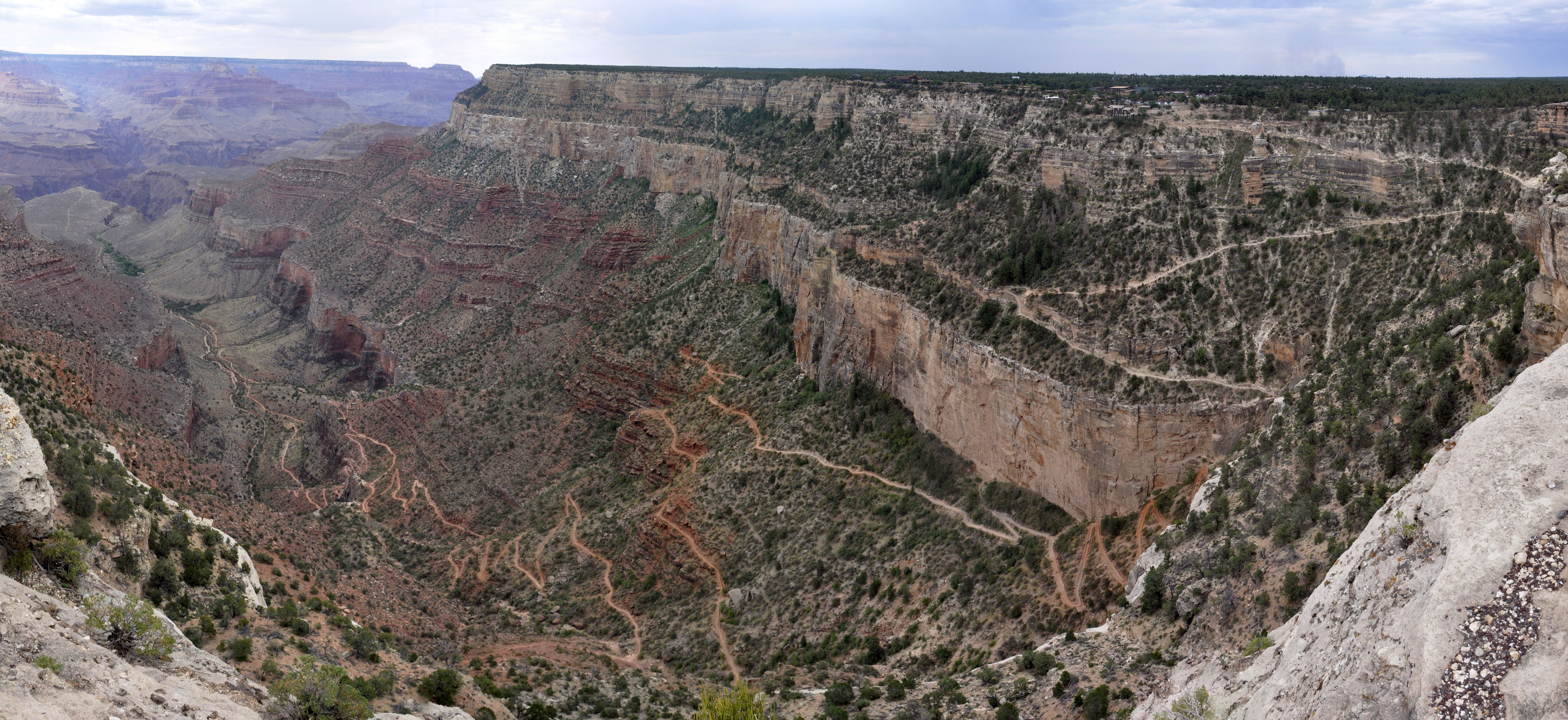
Grand Canyon moved its overnight backcountry reservations to recreation.gov in 2024. The system is faster than the old fax-and-wait system, but it’s also created a new trap: winning the lottery doesn’t mean you get to take the trip you planned.
Demand for spring and fall corridor permits can far exceed available campsites. A lottery win gives you an early-access booking timeslot, not a guaranteed itinerary. By the time your slot opens, your first-choice campsites may already be gone. Now you have three options: accept what’s left, pivot to a backup itinerary, or try again next month.
This is the real competition. Understanding the system means building multiple scenarios before you ever submit an application.
When to apply for 2027 trips
Each lottery covers one specific trip-start month only, opening 4.5 months in advance.
| Trip Month | Lottery Opens | Lottery Closes | What This Means |
|---|---|---|---|
| April 2027 | Nov 16, 2026 | Dec 1, 2026 | Best weather, highest demand. Bright Angel and South Kaibab book in minutes. |
| May 2027 | Dec 16, 2026 | Jan 1, 2027 | Peak season. Inner canyon warming but not yet dangerous. Expect high competition. |
| June 2027 | Jan 16, 2027 | Feb 1, 2027 | Heat risk. Temps exceed 100°F regularly; 110°F+ by late June. Not recommended. |
| July 2027 | Feb 16, 2027 | Mar 1, 2027 | Dangerously hot. Inner canyon exceeds 120°F. Rangers and experienced hikers avoid this entirely. |
| August 2027 | Mar 16, 2027 | Apr 1, 2027 | Same as July. Death risk without exceptional heat acclimatization. |
| September 2027 | Apr 16, 2027 | May 1, 2027 | Heat may still be serious early month; moderates by late September. Good alternative to May. |
| October 2027 | May 16, 2027 | Jun 1, 2027 | Prime fall season. Excellent weather but high competition competing with May. |
The dates follow a consistent pattern: applications open on the 16th of one month and close on the 1st of the following month for trips starting four months later. December 16–January 1 is the expected window for May trips under the current pattern. Always confirm the exact dates on Recreation.gov before applying.
What rim-to-rim means
Rim-to-rim means starting at one rim of the canyon and exiting at the opposite rim. The classic route is South Rim to North Rim: hike down the South Kaibab Trail (7 miles, 4,700 feet descent), cross the inner canyon floor, camp at Bright Angel Campground, then climb out via North Kaibab Trail (14 miles, 5,000 feet ascent). Total: 21 miles, 9,700 feet elevation gain and loss, completed in 3 days.
An alternative is South Rim to South Rim (down one trail, back up the same trail), which is a turnaround trip. Bright Angel down and back up is 18 miles, 4,360 feet each way, taking 3-4 days.
How the permit system actually works
In the lottery stage, you are not necessarily locking in your final campsite-by-campsite itinerary. If you receive early access, you use your assigned timeslot to build and reserve the actual available itinerary on Recreation.gov.
Once you select your campsite itinerary and complete checkout, your permit is reserved for those dates and campsites. Fees include a base permit charge plus per-person, per-night backcountry fees; rates differ between established corridor campgrounds and backcountry zones. Check the current Recreation.gov fee table before applying to understand total cost for your planned trip.
If you don’t win the lottery, you can still hunt for cancellations 30 days before your target trip date, when permits are released back to recreation.gov.
What happens if you win the lottery
You get an email with a date and time (sometime in the first two weeks of the month following your application close). Let’s say it’s January 15 at 2:47 PM.
At that time, you log into recreation.gov. The system shows available campsites night-by-night. You build an itinerary by selecting campsites, and the system only shows you pre-approved options for each subsequent night to prevent dangerous or logistically impossible plans.
Here’s the problem: many people may have booked before you. If you want South Kaibab down with Bright Angel Campground, you might be out of luck. If you wanted Bright Angel down and Havasupai Gardens up, someone else already has it.
You’re not locked into searching for 30-60 minutes. Once your timeslot arrives, you can log in and reserve anytime through the end of the month. But the best availability vanishes on day one. Each subsequent hour, hours, or days you wait, options narrow.
This is why three backup itineraries matter. You research them before applying. When your timeslot comes and your first choice is gone, you spend 30 seconds pivoting to backup plan B instead of walking away entirely.
How to approach this system
Strategy 1: Know the difference between corridor and wilderness access
Corridor trails (Bright Angel, South Kaibab, North Kaibab) are the most popular because they offer established campsites, ranger presence, and seasonal developed water. They are also the most competitive, especially in April, May, September, and October.
Havasupai Gardens (formerly Indian Garden) sits 4.5 miles below the South Rim on the Bright Angel Trail. It has established camping and seasonal water, and it can work as a turnaround, first-night camp, or part of a more flexible Bright Angel itinerary.
Wilderness zones such as Clear Creek and Hermit Creek are generally less competitive, but they require more skill. Expect fewer developed facilities, more complicated water planning, and a greater need for map-based navigation.
Choose based on what you’re actually capable of. An easier permit is worthless if you’re not ready for wilderness water management.
Strategy 2: Enter with three to four date ranges
Don’t apply for May 10–14 and pray. Apply for:
- May 10–14 (your first choice)
- April 22–26 (shoulder season, same trip)
- September 15–19 (fewer people, cooler)
- October 5–9 (peak season alternative)
You’re allowed one application per lottery month. So apply for May (closes January 1), apply again for April (closes December 1), apply for September (closes May 1), apply for October (closes June 1). Four applications. Four chances. One of them will land something usable.
Strategy 3: Be flexible with routes, not just dates
Go into your timeslot with three researched itineraries:
Plan A: South Kaibab down, Bright Angel up, corridor the whole way (everyone’s first choice).
Plan B: Havasupai Gardens as halfway, mixing corridor with slightly shorter days.
Plan C: Clear Creek wilderness zone, completely different route, less competition, no developed water infrastructure, and much higher self-reliance.
When Plan A is gone or only partly available, you do not reset. You click through to Plan C, confirm the itinerary in 90 seconds, and you have a permit. The difference between a successful season and failing is having decided in advance what you’re willing to do.
Strategy 4: Hunt the cancellation window
30 days before your trip, permits reappear as cancellations. The park releases them within 24 hours. If you wanted May but didn’t win the lottery, set a calendar reminder for April 1. Check recreation.gov daily starting then. You might catch a cancellation from someone whose weather forecast scared them off.
This can work. It’s not glamorous, and it requires persistence, but cancellations are one of the few real second chances after the lottery.
What the routes actually require
South Kaibab down / North Kaibab up
The classic rim-to-rim line descends 7 miles via South Kaibab Trail, losing about 4,700 feet with no water and very little shade, then climbs to the North Rim via North Kaibab Trail. Bright Angel Campground sits near the canyon bottom and is the usual first-night target for many corridor itineraries. North Kaibab water availability is seasonal and must be checked before your trip.
This route is logistically complex because your campsites, dates, trailheads, North Rim access, and transportation all have to line up. Confirm North Kaibab Trail status, North Rim seasonal access, and shuttle logistics before building your itinerary.
Difficulty: 7–8 out of 10, mostly because of the long climb out, heat exposure, and the consequences of getting your pacing wrong.
Typical 3-day trip: Day 1 hike 7 miles down South Kaibab to Bright Angel Campground. Day 2 hike roughly 7 miles up North Kaibab to Cottonwood Campground. Day 3 hike roughly 7 miles from Cottonwood to the North Rim. Total: about 21 miles, with extreme elevation change. Train with a loaded pack before attempting it.
Bright Angel corridor route
Bright Angel Trail descends 9 miles (4,360 feet elevation loss) from the South Rim to Bright Angel Campground, with Havasupai Gardens (4.5 miles down) as a possible first night stop. This trail has established camps, ranger presence, and seasonal piped water at key locations. Most people use this as a turnaround (down and back up the same trail) or as part of a rim-to-rim trip.
Difficulty: 5-6 out of 10. The climb back up is less sustained than South Kaibab, but the trail is heavily used with many other hikers. Rangers monitor this route carefully.
Typical trip: Day 1 hike 9 miles down to Bright Angel Campground. Day 2 explore or rest. Day 3 hike 9 miles back up to the rim. Total: 3-4 days, 18 miles.
Wilderness zones (Clear Creek, Hermit Creek)
Clear Creek and Hermit Creek are off-trail or faint-trail routes that require advanced navigation skills. No developed water, no established camps, no toilets. You navigate using a topo map, find your own campsites on flat ground, and carry or filter all your water from creeks. A typical Clear Creek loop from the South Rim is 25-35 miles and takes 3-5 days depending on route and pace.
Difficulty: 6-8 out of 10, depending on terrain and water finding skills. Route-finding is the hard part, not elevation gain. These routes are recommended only for experienced desert backpackers comfortable with off-trail navigation.
Typical trip: Enter via Bright Angel Trail, hike down Clear Creek for 8-12 miles of route-finding, establish a camp, explore, return same way. Total: 4-6 days, 25-35 miles.
The actual logistics
Water
Corridor campsites have seasonal piped water at established locations (Bright Angel, Havasupai Gardens, Cottonwood). Water availability changes due to season, maintenance, pipeline breaks, and freezing. Always check current water status with the Backcountry Information Center before departure. Do not assume piped water will be flowing.
Wilderness zones require you to know where water is. Perennial creeks are more dependable than seasonal drainages, but you should still verify current conditions with rangers, recent trip reports, and updated maps. Seasonal creeks may flow in spring but dry up later in summer or during drought years.
Treat all water. Giardia exists in Grand Canyon water. Filter or chemically treat everything.
Heat
Summer temperatures in the inner canyon exceed 120°F in direct sun. This is serious heat risk. Many rangers and experienced canyon hikers strongly discourage inner-canyon backpacking in June through August unless you have exceptional desert heat experience and a conservative plan. Spring (April–May) and fall (September–October) are generally safer, but heat, cold, storms, and icy upper trails can still create risk depending on exact dates and conditions. Always check current forecasts and conditions before you go.
Food and animal-resistant storage
Corridor campsites usually provide metal food-storage boxes or cans. Use them. Rodents, ravens, and ringtails are the usual concern, not bears.
For wilderness zones, follow current Grand Canyon food-storage rules and recommendations. Use a hard-sided container, Ratsack, Ursack, or other approved method where appropriate, and never leave food unattended.
Gear you actually need
Water capacity: Carry enough water for the longest dry stretch on your itinerary. A 3-liter capacity may be enough for some corridor trips, but wilderness routes and hot conditions can require more.
Navigation: Waterproof topo map, compass, and the ability to use them. GPS is useful, but do not rely on it as your only navigation tool.
Sun protection: Wide-brimmed hat, sunglasses, high-SPF sunscreen. You will reapply constantly. Lip balm with SPF. Sun exposure is intense on exposed canyon trails, especially near the rim and on shade-free descents.
Shelter and insulation: Bring shelter appropriate for the forecast and your route. Some experienced canyon hikers use tarps or bivies, while others prefer tents for wind, sand, insects, or weather protection. Bring layers for nighttime; canyon temperatures can swing dramatically between day and night, and wind is constant.
Footwear: Broken-in hiking boots or shoes with good traction on slick rock. Many serious hikers use trail runners. Choose what you’ve tested on steep, rocky ground for miles.
Microspikes: Usually not needed. Only necessary if starting on icy upper sections in winter or early spring.
What most people don’t know
The Grand Canyon permit system is winnable. But winning requires accepting that you might not get the trip you planned. The people who succeed aren’t the ones with perfect research. They’re the ones who show up with three backup plans and pivot when their timeslot comes and reality doesn’t match expectations.
Planning before you apply is the actual skill. The lottery determines whether you get system access. Your flexibility determines whether you get a permit.
This is fundamentally a logistics problem. Success comes from planning your backup scenarios before you apply, not from luck in the lottery draw itself.
Next steps
- Pick your season (April-May or September-October for generally better conditions).
- Research three complete itineraries you’d be happy to do.
- Identify exact dates for each itinerary.
- Plan your applications for multiple lottery months.
- Check recreation.gov/permits/4675337 two weeks before your lottery window opens to set up your account.
- Submit on the 16th of the month, four months before your trip.
- If you win, log in ready to pivot. If you don’t, watch for cancellations 30 days before your trip.
Don’t want to track lottery dates yourself? We’ll send you reminders for Grand Canyon lottery windows and cancellation surges once we launch alerts.
Last verified: June 2026 | Source: National Park Service, Recreation.gov, Grand Canyon Backcountry Information Center


