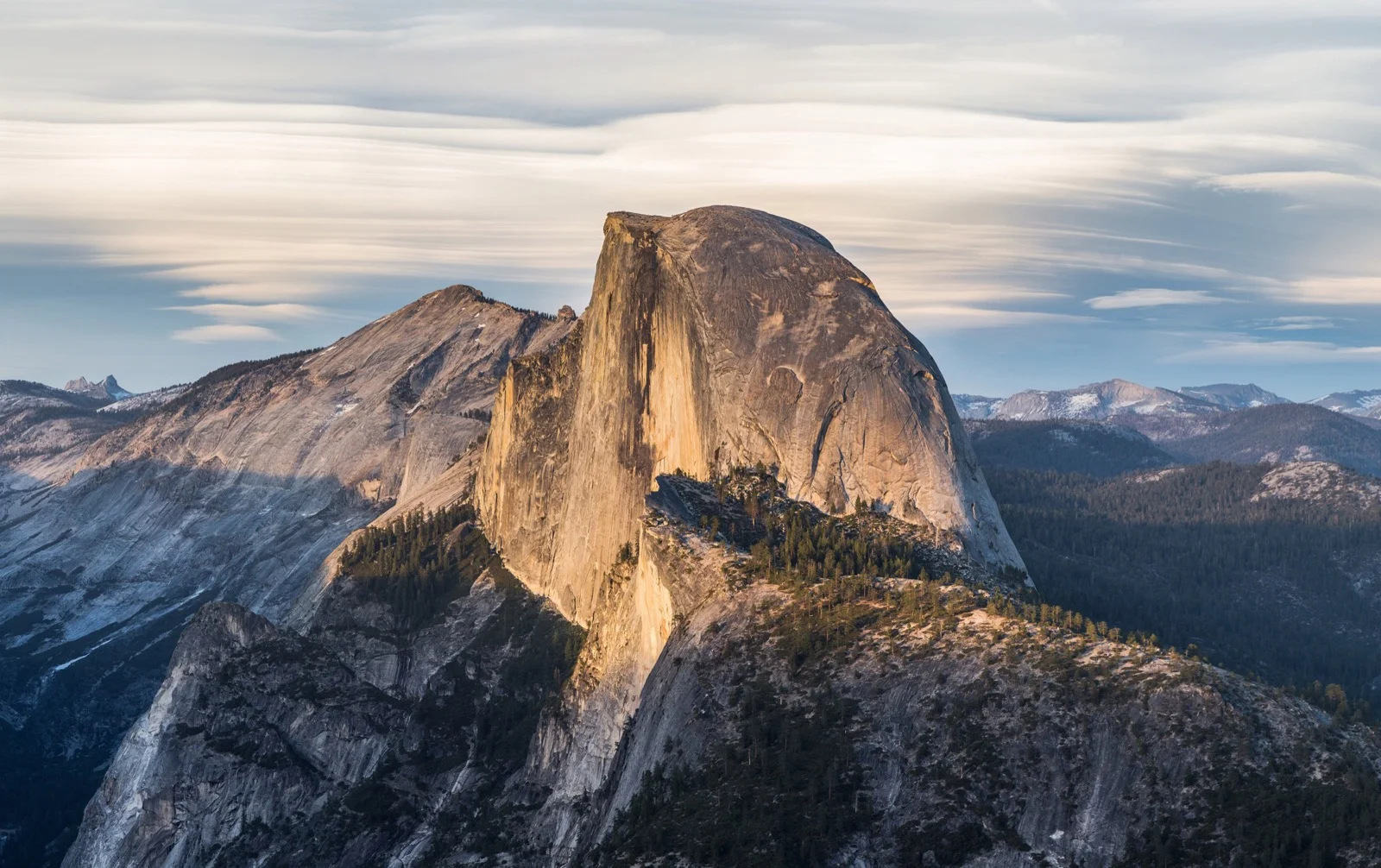
A Half Dome permit is on every serious hiker’s bucket list. It’s also the most competitive day hike permit in the National Park system. Every March, tens of thousands of hikers apply for the right to pull themselves up 400 feet of steel cables bolted into one of Yosemite’s most iconic landmarks. Most of them don’t get one. Not because the odds are impossible, but because they don’t understand how the system actually works.
I’ll take you through the preseason lottery, the daily lottery, the backcountry route most people overlook, and the strategies that actually move the needle on your odds. If hiking Half Dome is on your list for 2026, here’s what you need to know.
2026 Half Dome Permit — Key Dates at a Glance
- Preseason Lottery Opens: March 1, 2026
- Preseason Lottery Closes: March 31, 2026
- Winner Notification: Mid-April 2026 (around April 10)
- Acceptance Deadline: April 24, 2026
- Unaccepted Permits Enter Daily Pool: Late April 2026 (after April 24)
- Cables Up: ~May 22, 2026
- Daily Lottery Season Opens: ~May 22, 2026
- Cables Down: ~October 13, 2026
- Daily Lottery Application Window: Midnight to 4:00 PM PT, two days before hike date
Note: The preseason lottery has already closed for 2026. If you’re planning a Half Dome hike this season, the daily lottery is your path.
Why Do You Need a Half Dome Permit?
The National Park Service has required permits to hike Half Dome’s cables since 2010. Before the system was put in place, peak days at Yosemite National Park saw upwards of 1,200 hikers on the cables at once. It was genuinely dangerous, and in 2009, two people lost their lives on the cables. The permit went into effect the following year.
The system caps daily traffic at 300 hikers: 225 day hikers and 75 backpackers. The cables go up each spring, typically the Friday before Memorial Day, and come down in mid-October. Permits are required seven days a week any time the cables are up. No exceptions, no walk-up availability at the trailhead.
Can You Hike Half Dome Without a Permit?
Yes, but only so far. The permit requirement kicks in at the Sub Dome checkpoint, roughly a half mile before the summit. Everything below that — the Mist Trail, Vernal Falls, Nevada Falls, the approach to Sub Dome — is permit-free. That’s about 13 of the 14-16 miles round trip.
What you can’t do without a permit is get past the ranger checkpoint at the base of the Half Dome cables. Rangers are stationed there consistently. The fine is significant. It’s not worth testing.
The only exception is the off-season, when the cables aren’t installed. Yosemite doesn’t outright ban it, but the wooden planks and poles are removed, the cables lie flat on the dome, and the difficulty goes up considerably. It’s strongly discouraged for good reason.
How the Permit System Works
There are two ways to get Half Dome day hike permits: the preseason lottery in March or the daily lottery throughout the hiking season. Both run through Recreation.gov. There’s also a backcountry permit route that most day hikers never consider. Each permit process is covered below.
The Preseason Lottery
The Half Dome permit lottery has two phases. The preseason lottery is the main event. It runs March 1 through March 31, covering the entire upcoming season from late May through mid-October.
How it works:
- Apply through the Half Dome permit lottery on Recreation.gov
- Each application covers up to six people and up to seven requested dates in priority order
- Your application only wins if permits are available for at least one of your requested dates
- Application fee: $10 per application, non-refundable regardless of outcome
- If selected, you pay an additional $10 per person
Winners are notified by email around April 10. You have until approximately April 24 to accept and pay the per-person fee. Miss that window and your permit is cancelled. No exceptions. Check both your email and your Recreation.gov account. The notification doesn’t always find people.
One rule that trips people up every year: your name can only appear on one preseason lottery application, either as permit holder or alternate. Show up on multiple applications and all of them get cancelled. It happens more than you’d think.
INSIDER CALLOUT — What most people don’t know: There’s no advantage to applying early. Someone who submits on March 31st has identical odds to someone who submitted on March 1st. The lottery is randomized after the window closes, not as applications come in. The only thing that matters is applying within the window.
The Daily Lottery
Didn’t win the preseason lottery, or want flexibility to hike on short notice? The daily lottery runs throughout the hiking season. It opens two days before each hike date.
How it works:
- Apply through the Half Dome daily lottery on Recreation.gov
- Application window: midnight to 4:00 PM Pacific Time, two days before your hike
- Results are emailed late that same evening
- For your desired date of Saturday, apply Thursday by 4:00 PM and check your email Thursday night
- The $10 per person fee is charged automatically if you win. If your payment fails, the permit is forfeited immediately. No second chances. Before entering the daily lottery, confirm your payment method on file is valid and current: card expiration, billing address, everything. Failed payments happen silently.
About 50 permits per day come available through the daily lottery, though the actual number shifts based on cancellations and under-use of preseason permits.
INSIDER CALLOUT — What most people don’t know: After the preseason acceptance deadline passes around April 24, unaccepted permits quietly flow back into the daily lottery pool. Late April and early May, before the summer crowds show up, is when daily lottery odds are at their peak for the entire season. If you have any flexibility to hike in that window, play the Half Dome lottery hard.
What the Odds Actually Look Like
The NPS publishes detailed Half Dome lottery statistics. Most hikers never look at them. Here’s what the 2024 data shows:
Preseason lottery success rate is 22% overall, but that number is misleading. Each application covers multiple dates, so your odds on any single specific date are closer to 1%. The 22% means 22% of lottery applications got at least one of their requested dates.
Daily lottery success rate runs about 19% overall, but it swings dramatically by day of week. Saturday accounts for 21% of all submitted applications but has the lowest success rate at roughly 14%. Weekday applications (Tuesday-Thursday) cluster around 22% success rate.
The practical implication: a Tuesday or Wednesday in September gives you dramatically better odds than a Saturday in July. September has lighter competition, the cables are still up, the valley crowds have thinned, and the weather is often the best of the season.
How to Actually Improve Your Odds
Most guides tell you to apply early and hope for the best. Here’s what actually moves the needle.
Choose weekdays over weekends. Saturday applications account for 21% of all submissions. Tuesday through Thursday are your friends.
Target late season. June is peak competition. Schools are out on the West Coast and everyone wants Half Dome on their summer list. September and October have significantly fewer applicants and the cables are still up through mid-October.
Apply for a range of dates, not just one. The preseason lottery lets you request up to seven dates in priority order. More dates means more chances for at least one to hit. Put your most flexible dates last.
Keep your group small. Smaller groups increase your chances of winning a permit. The lottery only awards permits if the full number requested is available on a given date. A group of two has far more winning dates available than a group of six.
Designate an alternate permit holder. This is the most underused strategy in the lottery. If your alternate can hike on different dates than you, you effectively have two applications working for the cost of one. The alternate must accept their role during the application window. Confirm with them immediately after submitting or you’ll lose that advantage.
For the daily lottery, play consistently. Each lottery is independent. Playing every Thursday and Friday through the season gives you many shots, especially during the less competitive midweek days.
The Backcountry Route Most Day Hikers Overlook
If you’re willing to spend at least one night in the Yosemite backcountry, there’s a second path to the Half Dome summit that doesn’t involve the day hiker lottery at all.
INSIDER CALLOUT — What most people don’t know: The Half Dome permit itself is the easy part of this route. If you can win a Yosemite Wilderness permit from one of the designated trailheads, attaching a Half Dome permit is straightforward. You request it at the Yosemite Wilderness Center when you pick up your backcountry permit and pay the fee. Rangers rarely turn this down if quota allows. The hard part is winning the wilderness permit. For anyone already planning a Yosemite backcountry trip, this is often the most reliable path to the summit.
Trailheads that allow a Half Dome permit attachment:
- Happy Isles (camping at Little Yosemite Valley)
- Glacier Point (camping at Little Yosemite Valley)
- Happy Isles past Little Yosemite Valley
- Sunrise Lakes (Sunrise High Sierra Camp or Vogelsang)
- Cathedral Lakes
- Rafferty Creek to Vogelsang
- Mono Meadow
For trailhead-by-trailhead competition, quotas, and Half Dome eligibility details, see our Yosemite wilderness trailhead guide.
Backpackers starting from Happy Isles to Past LYV on a Donohue Pass-eligible permit are often section-hiking or thru-hiking south on the JMT — see our JMT permit strategy for exit quotas and southern-term logistics.
A Yosemite Wilderness permit runs through its own lottery on Recreation.gov, with applications available 24 weeks in advance. The backcountry permit is the hard part. Attaching Half Dome to it is the easy part.
I’ve attached a Half Dome permit to a wilderness permit twice, most recently starting from Sunrise Lakes. Both times, I arrived at the Yosemite Wilderness Center 30 minutes before opening, requested the Half Dome permit addition, and paid the fee on the spot. The rangers handled it seamlessly both times. It’s a longer approach than from the Valley, but you’re hiking in before the day hikers arrive and have the cables to yourself early in the morning. Worth it.
One important note: wilderness permits issued outside Yosemite are not valid for Half Dome. If your backpacking trip starts outside the park, you need the standard day hiker lottery.
What Rangers Actually Check
Rangers are stationed at the Sub Dome checkpoint and they check permits consistently. People get turned around here regularly. Don’t be one of them.
What you need at the checkpoint:
- The trip leader or alternate must be physically present with the group
- Government-issued photo ID matching the name on the permit
- Email confirmation showing the permit has been paid. Digital on your phone is fine.
What gets you turned around:
- Permit holder and alternate both absent from the group
- Payment that failed after winning the daily lottery
- Names that don’t match ID
Cancellation policy: the $10 per-person recreation fee is fully refundable if you cancel by 11:59 PM Pacific the day before your hike, or if the cables aren’t installed on your permit date. The $10 application fee is never refundable, regardless of outcome.
What You’re Actually Getting Into
Securing the permit is step one. The hike is the other thing to take seriously.
Half Dome is 14-16 miles round trip with roughly 4,800 feet of elevation gain from Happy Isles. Most hikers take 10-14 hours. You follow the Mist Trail past Vernal and Nevada Falls, up the John Muir Trail, and onto the Half Dome Trail to the Sub Dome and cables. The Half Dome Trail itself covers the final stretch from the valley junction to the base of the cables. This is where the real climbing begins.
The Half Dome cables are the final 400 feet, a roughly 45-degree incline on bare granite with steel cables on either side and wooden planks bolted into the rock as footholds. It looks intimidating in photos. It is what it looks like. Bring gloves. Your hands will tire on the metal cables faster than you expect. Most people use leather work gloves. Traffic jams on the cables are a real thing on busy weekend mornings — another reason the early start matters more than most guides admit.
Leave the Happy Isles trailhead by 6:00 AM. Earlier is better. Afternoon thunderstorms build quickly on the exposed summit, and you want to be off the cables and heading back down before they roll in. The early start also means you hit the cables before the crowd. It makes a real difference.
Gear You Actually Need
- Gloves: leather work gloves or climbing gloves, non-negotiable on the cables
- Microspikes: essential in early season when snow and ice are still present on the upper trail
- Water: at least 3-4 liters, there’s no water source above the valley
- Food: this is a full day, plan accordingly
- Headlamp: if you’re starting before sunrise or finishing after dark
- Layers: summit temperatures run significantly colder than the valley, afternoon storms develop fast
Is Half Dome Worth the Permit Hassle?
Half Dome isn’t Yosemite’s most scenic hike. Clouds Rest makes a reasonable argument for that title, and it doesn’t require a permit. Half Dome isn’t even the biggest day in the park for vertical gain.
What it is: the final 400 feet up the cables is unlike anything else in the National Park system. You’re pulling yourself up bare granite on steel cables, looking straight down at the valley, on one of the most recognizable formations in North America. That specific experience doesn’t exist anywhere else.
Whether it’s worth the lottery hassle depends on what you’re after. If you want a hard day with a view, there are easier paths to that. If you want the cables, there’s only one way to get there.
For most serious hikers, it’s worth it. Once, at minimum.
Frequently Asked Questions
How hard is it to get a Half Dome permit? Competitive but not impossible. The preseason lottery runs about 22% overall, meaning roughly 1 in 5 applications wins at least one requested date. The daily lottery runs about 19% overall, with weekday odds climbing to around 22%. Targeting weekdays in September gives you the best shot.
Can you hike Half Dome without a permit? You can hike to Sub Dome without one. The permit requirement kicks in at the Sub Dome checkpoint, about a half mile below the summit. Rangers are stationed there consistently and check every hiker. No permit, no cables.
What are the Half Dome permit lottery odds? Preseason: roughly 22% of applications win at least one date. Daily lottery: roughly 19% overall, ranging from about 14% on Saturdays to 22% on weekdays. Data is published by the NPS in its Half Dome permit lottery statistics.
Are there walk-up Half Dome permits? No. There are no walk-up permits at the trailhead or anywhere in the park. All Half Dome day hike permits require either the preseason lottery, the daily lottery, or an eligible Yosemite wilderness permit with a Half Dome attachment.
When do Half Dome permits go on sale? The preseason lottery opens March 1 and closes March 31. The daily lottery opens two days before each hike date, from midnight to 4:00 PM Pacific. Both run through Recreation.gov.
Alerts for Half Dome
Playing the daily lottery means checking Recreation.gov every other day throughout the season. WildernessBeta sends email alerts when daily lottery windows open and when cancellations appear for specific dates. Sign up below.
All permit information verified against the NPS Half Dome permits page and Recreation.gov. Last verified June 2026.


